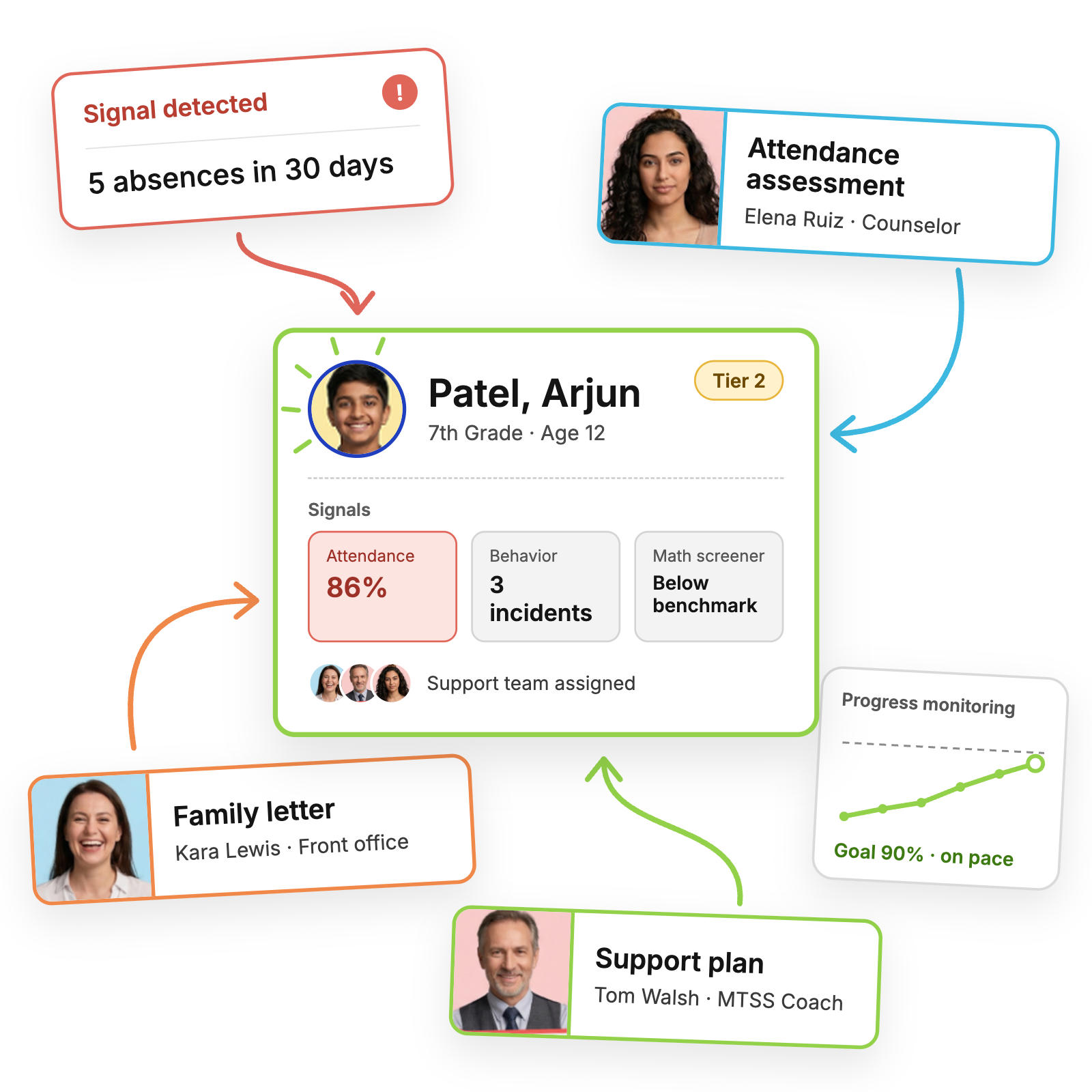
Supporting one student takes a whole team, and keeping everyone in sync is hard

Attendance, behavior and academic data live in different places.


Keeping everyone clear on who's up next takes a lot of emails and check-ins.

It's hard for anyone to see where a student is in the whole process.
Helping one student often means coordinating counselors, teachers, principals, interventionists, the front office and families, each working in a different system.


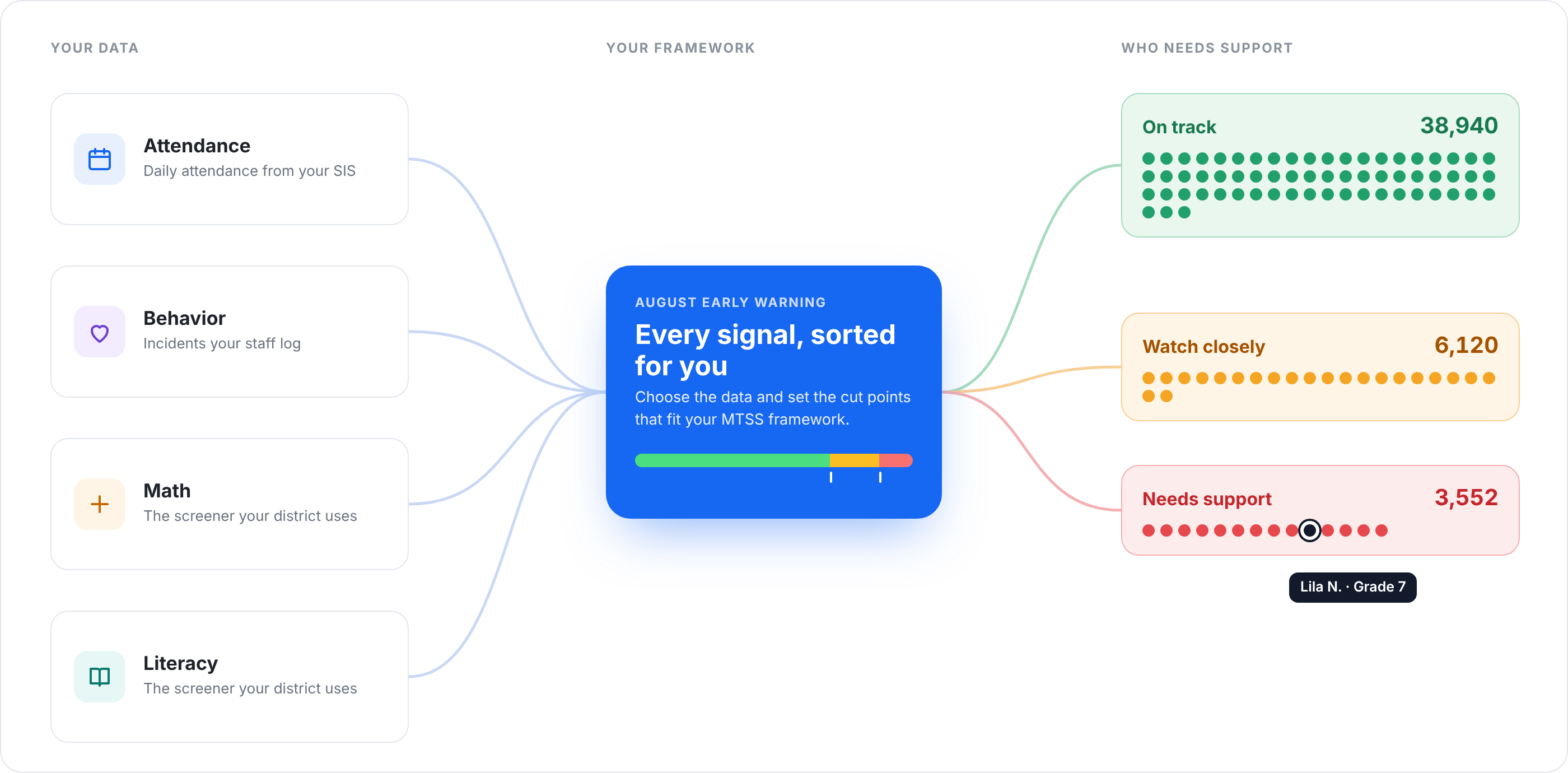
August pulls attendance, behavior, math and literacy data together and sorts every student into on track, watch closely, or needs support, with the most concerning students at the top. Filter to your own caseload or to everyone who needs attention right now.
Every signal is configurable, so you can bring in the data that matters most to your district, whether that's a specific screener, behavior data, or attendance data from your SIS, and set the cut points that fit your MTSS framework.
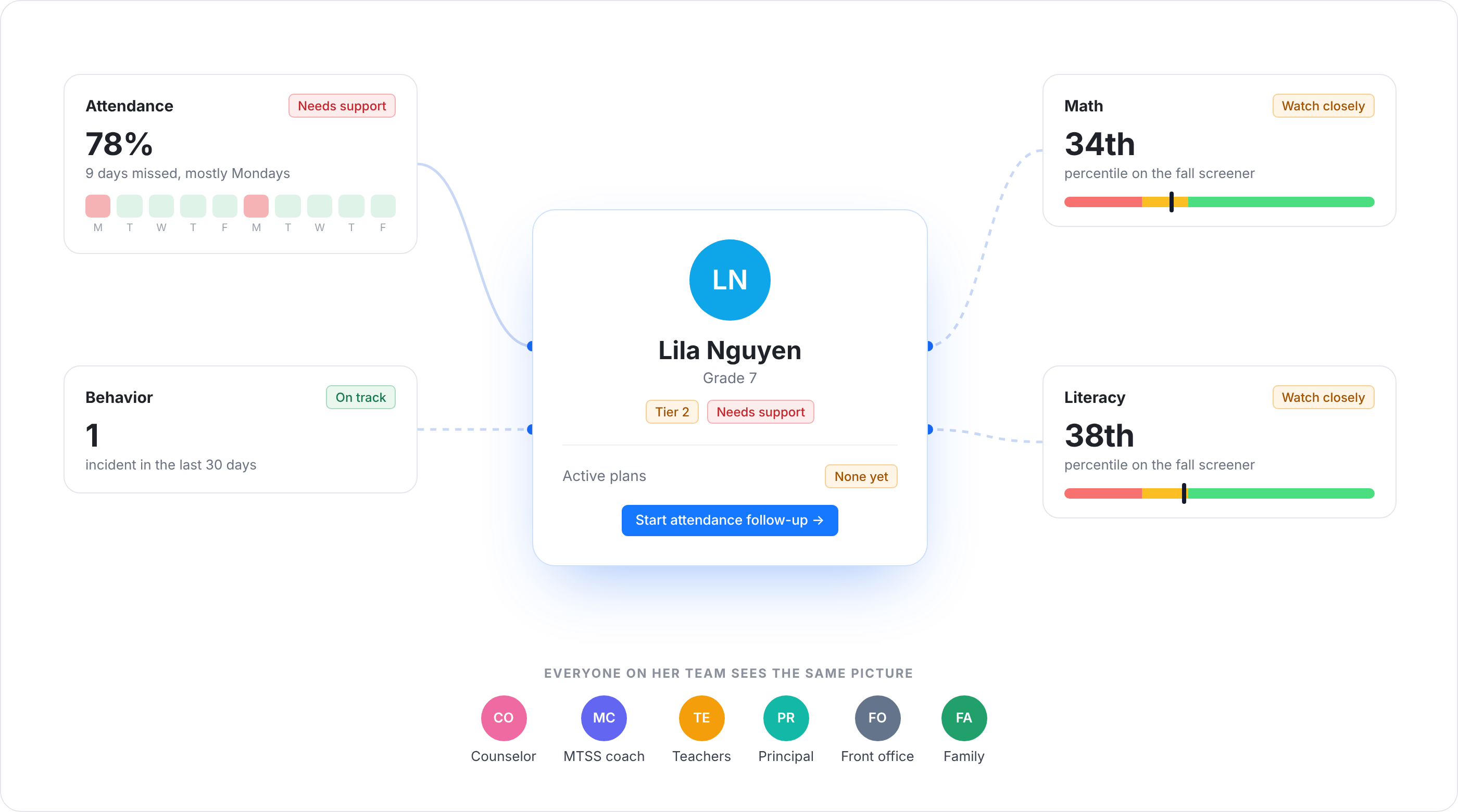
Click into any student to see their attendance, behavior and academic signals together, along with their tier and any plans already in place. Counselors, teachers, principals and the front office all see the same picture, so it's easy to agree on what the student needs next.
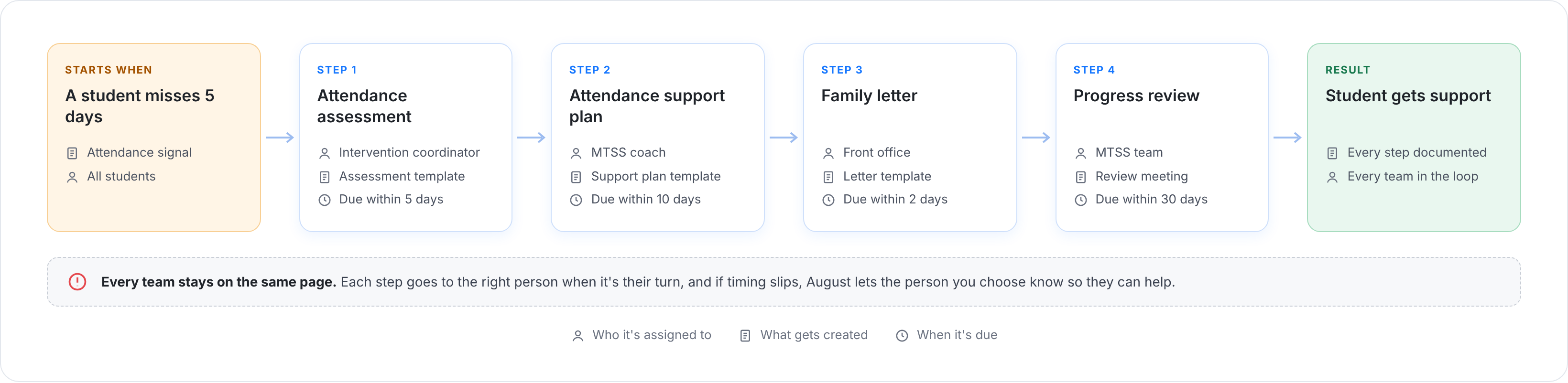
When a student crosses a threshold you set, August starts a workflow automatically. It strings together the actions that should happen next, like an assessment, a support plan, a family letter and a progress review, and assigns each one to the right person with a due date.
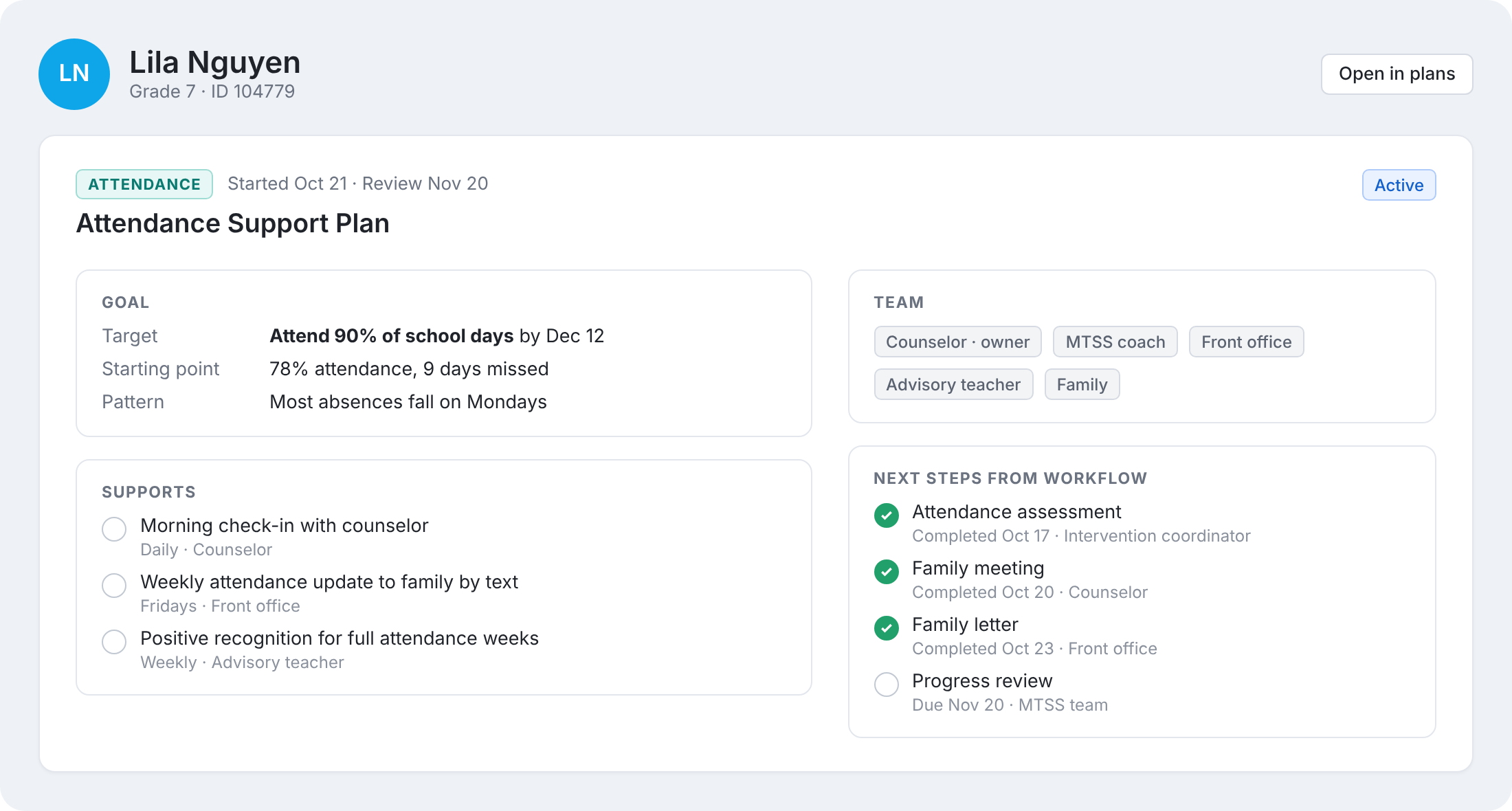
The workflow brings the right people together to build a plan for the student. The attendance plan holds the goal, the starting point, the supports each person is responsible for, and the next steps from the workflow, so the counselor, MTSS coach, front office and family are all working from the same plan.
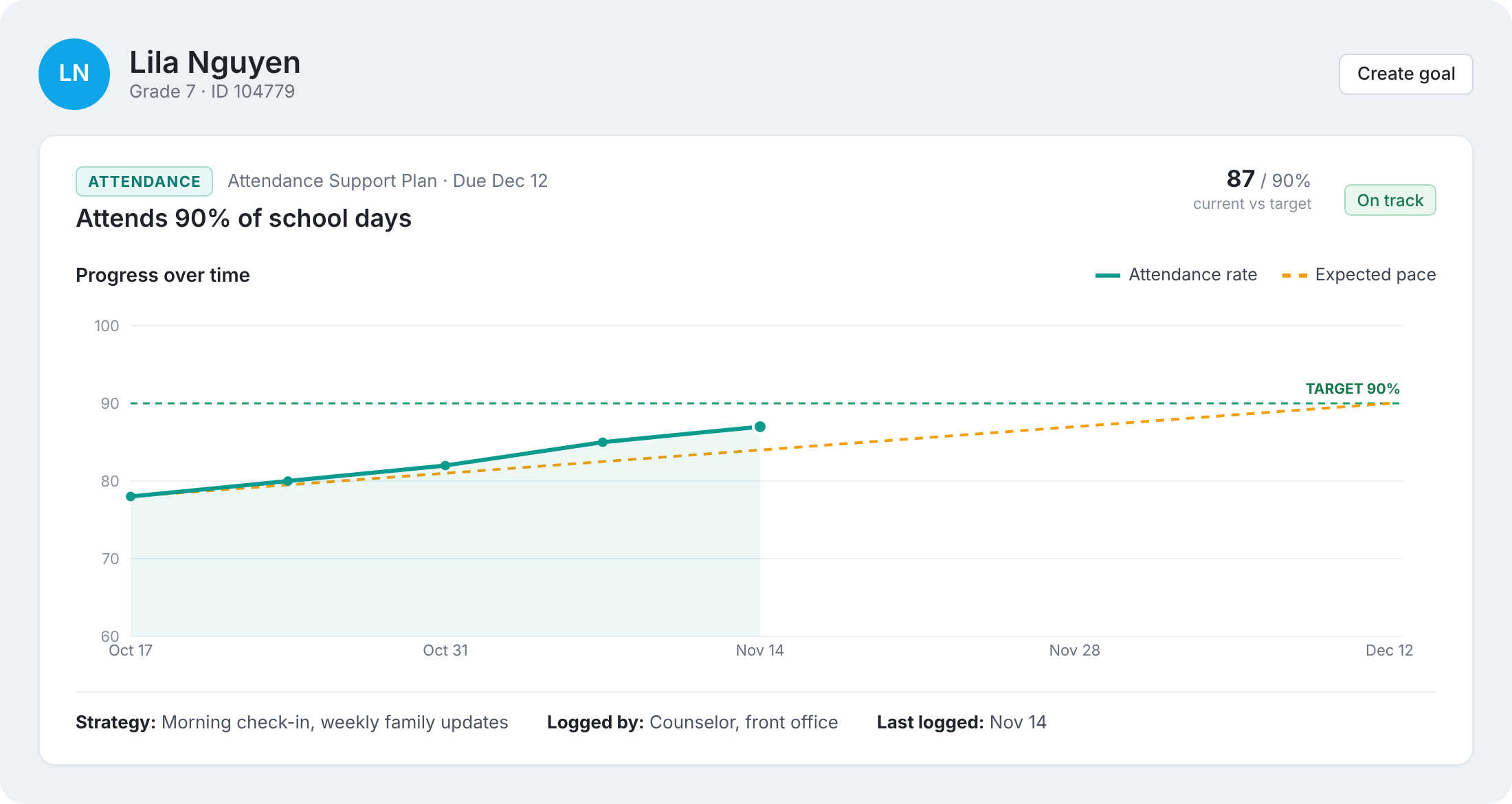
As the team logs attendance and check-ins, August graphs the student's progress against the pace they need to reach their goal. Everyone can see right away when a plan is working, and when it might be time to come together and try something new.

Workflows keep every team on the same page
A workflow is your school's own process, set up once in August, so counselors, coaches, principals and the front office always know where a student is and who's up next. You choose what starts it, which steps follow, who owns each one, and how long they have.
You pick the trigger: an attendance threshold, repeated behavior incidents, a low screener score, or a new enrollment.
Every step, from the assessment to the family letter, has an owner and a due date.
If a step runs late, August alerts the person you choose, so no student waits on a missed handoff.
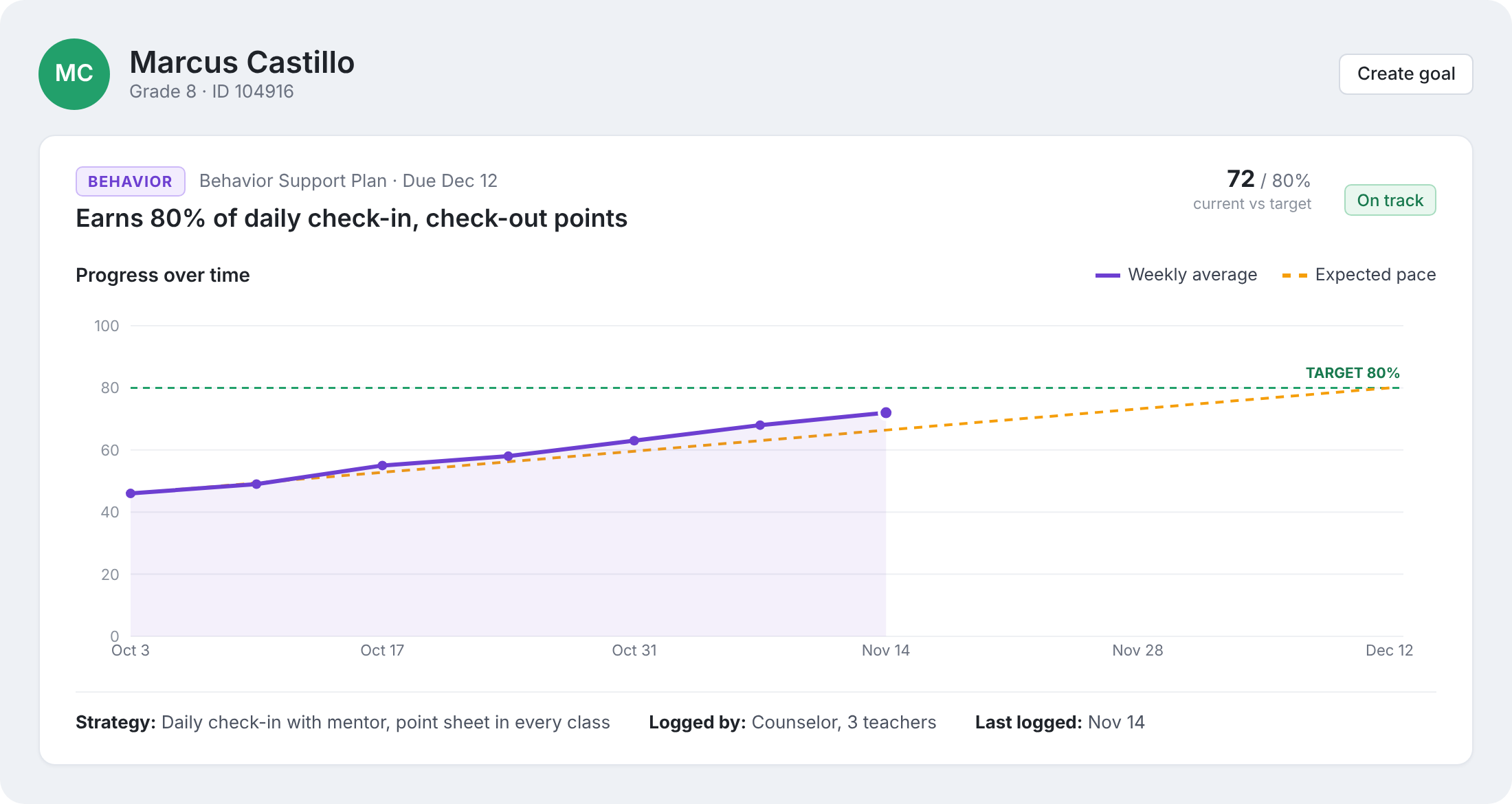
Once a plan is in place, the whole team can watch progress together. Every goal gets a progress monitoring graph that compares where a student is today with where they need to be, so everyone can celebrate what's working and adjust early when something needs a different approach.
Track any goal on a student's plan, from behavior and social-emotional goals to academics and attendance. Counselors, teachers and interventionists all log data in the same place, and August shows the expected pace alongside the student's actual progress, so it's easy to tell at a glance whether the plan is on track.
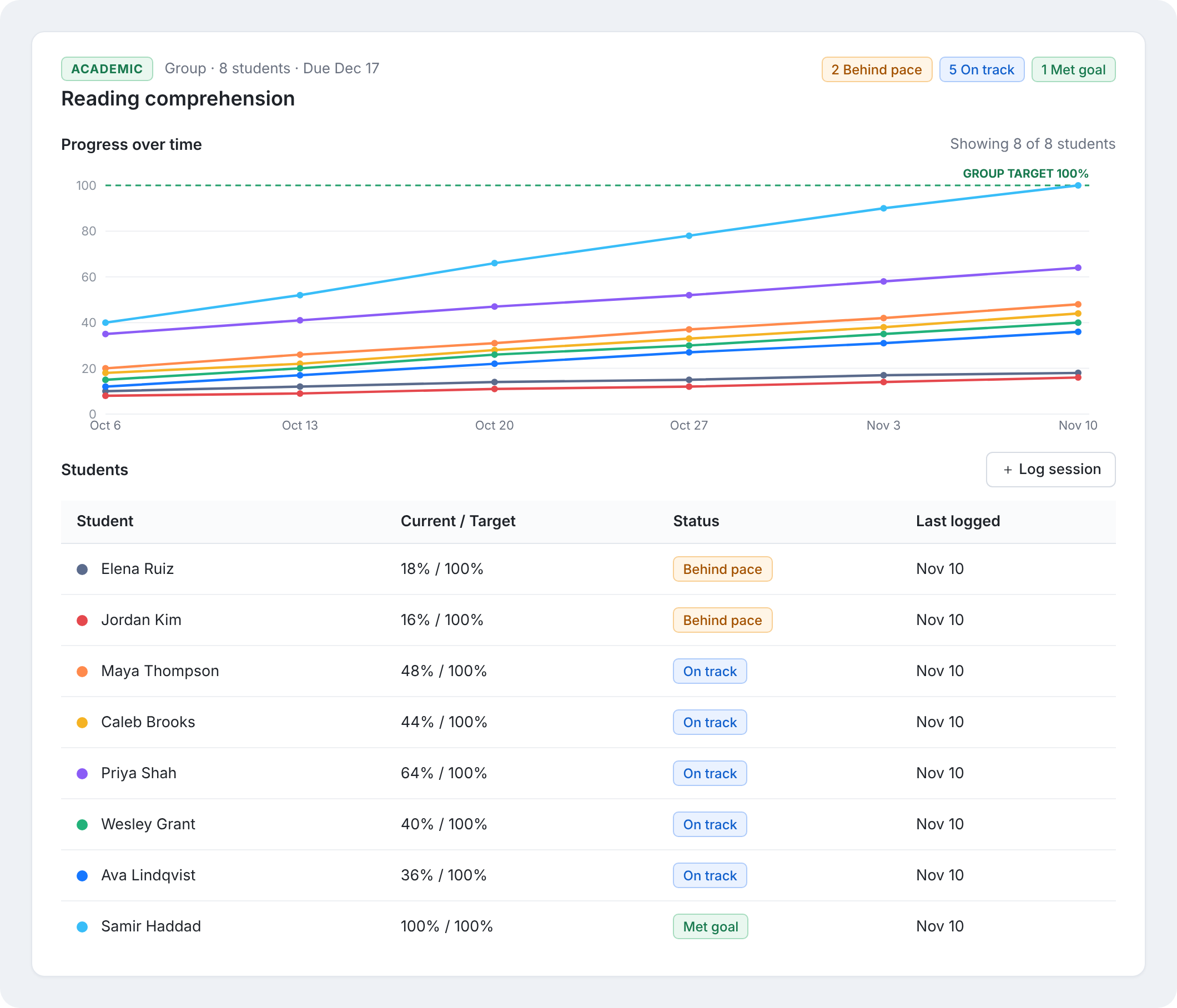
Running a reading group or a skills group? Log one session for the whole group and see every student's progress on the same graph. Students who are behind pace rise to the top, so the interventionist and the MTSS team can talk about who might need something more before the next review.


Walk into the meeting with the students who need attention already at the top of the list, along with what's been done for each one and what's next.

Interventionists, counselors and coaches see their own students and their own tasks, so they can spend their time with kids and trust that the rest of the team is in the loop.

A student might be working with a reading interventionist, checking in with a counselor, and getting attendance support from the front office all at once. August keeps each of those plans, goals and next steps in one place, so everyone supporting that student can see what the others are doing and work toward the same goals together.

Principals and district leaders get a live view of students by tier, intervention sessions over time, and where incidents happen, without waiting on a report.


August brings health, behavioral health, learning support, and administration onto one connected platform.