




.svg)
In most districts, the record of what a student's
IEP requires and the record of what happened
in a session live in different systems entirely:



So when it's time to submit a claim for reimbursement, someone is stitching together records from two or three places, hoping the dates and details line up. When they don't, claims get denied, reimbursement gets missed, and your team spends more time reconciling paperwork than supporting students.


More districts are working to maximize Medicaid reimbursement for the special education related services already written into their students' IEPs. At the same time, audits are getting more rigorous, and the standard for what counts as compliant documentation keeps rising. Most special education platforms were built to handle one side of this or the other, not both.









When a Speech Language Pathologist, Occupational Therapist, Physical Therapist, or Special Education teacher logs a session, it's tied directly to the IEP goal it supports, not entered separately and matched up later.


Claims are generated from the actual encounter notes your providers are already writing, with the right medicaid billing codes and credentials attached, so nothing has to be reconstructed after the fact.


Case managers, SLPs, OTs, PTs, and special education teachers all work from the same student record, so goal progress, service delivery, and billing status are visible in one place instead of scattered across three.
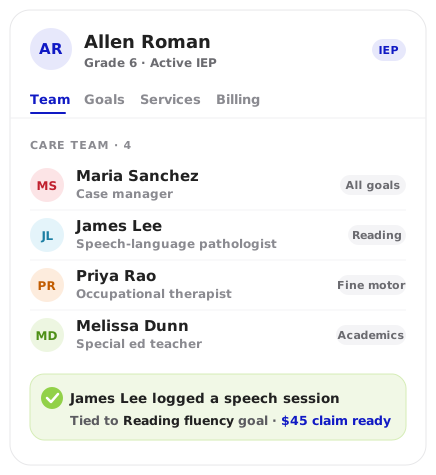
From IEP to progress monitoring to reimbursement without leaving the platform
• Goals, service logs, and billing codes stay in one student record
• Claims generate from documentation providers already write
• Nothing to reconcile before a claim goes out

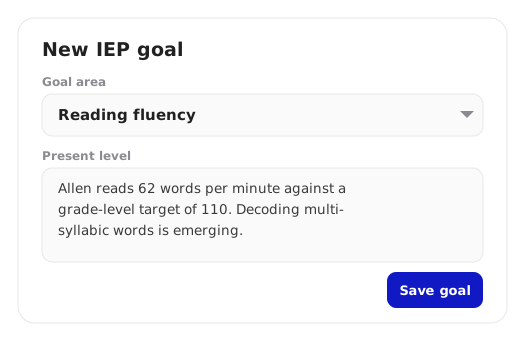
Present levels, goals, and services, all documented in one plan.
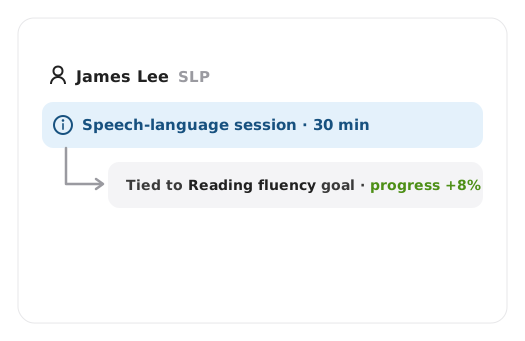
SLPs, OTs, PTs, and special education teachers document delivery and progress in the same place the goal lives.

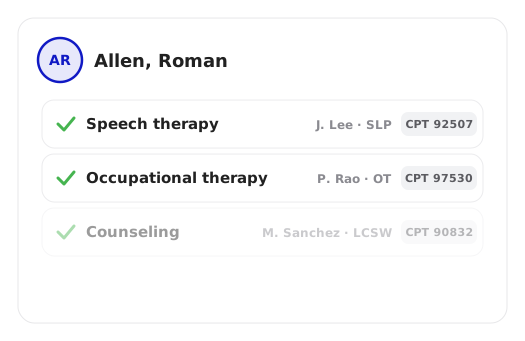
Encounter notes become billing-ready records automatically, with credentials and CPT codes attached.
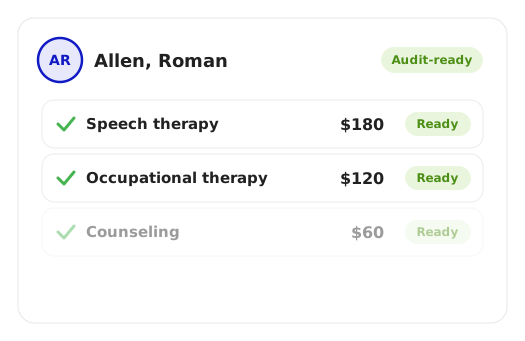
No reconstructing what happened. No guessing whether a service was tied to the IEP.

See how IEP management, goal tracking, and Medicaid billing work together in August.