Schools have absence data by 8 a.m. The gap is the follow-up. See why attendance intervention fails at scale and how August closes it without adding staff.
The scale of chronic absenteeism is well understood. What is less examined is the structural reason schools struggle to respond to it effectively, even when they recognize the urgency.
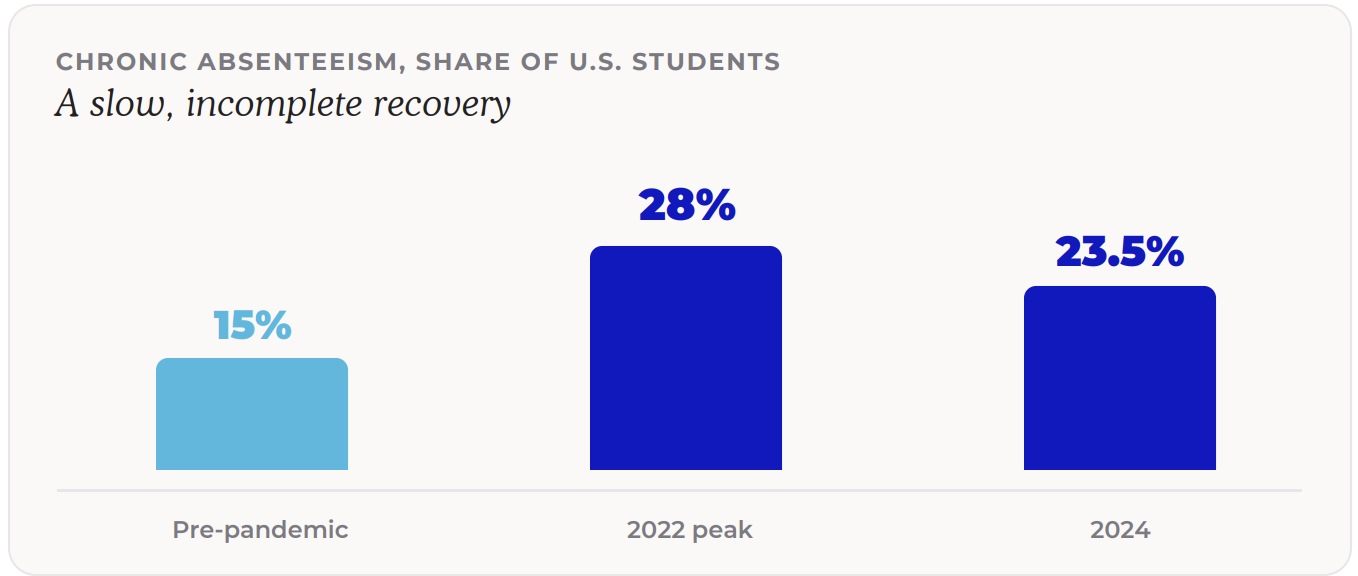
Chronic absenteeism in U.S. schools surged from 15 percent of students before the pandemic to a peak of 28 percent in 2022. It has declined since then, but slowly: a 2025 AEI analysis tracking 44 states found the national rate still at 23.5 percent in 2024, representing approximately 8.6 million students and 155 million lost instructional days in a single year.1
RAND Corporation’s 2024–25 survey of school district leaders found that 40 percent named chronic absenteeism among their top three most pressing issues, and that in roughly half of urban districts, more than 30 percent of students remained chronically absent.2
Schools have absence data in their student information systems by 8 a.m. The gap is what happens between that data point and a completed follow-up: the call to the family, the reason logged, the pattern flagged, the counselor looped in. That workflow, done manually and done well, is more labor-intensive than most schools can sustain at scale.
Why timing is the critical variable
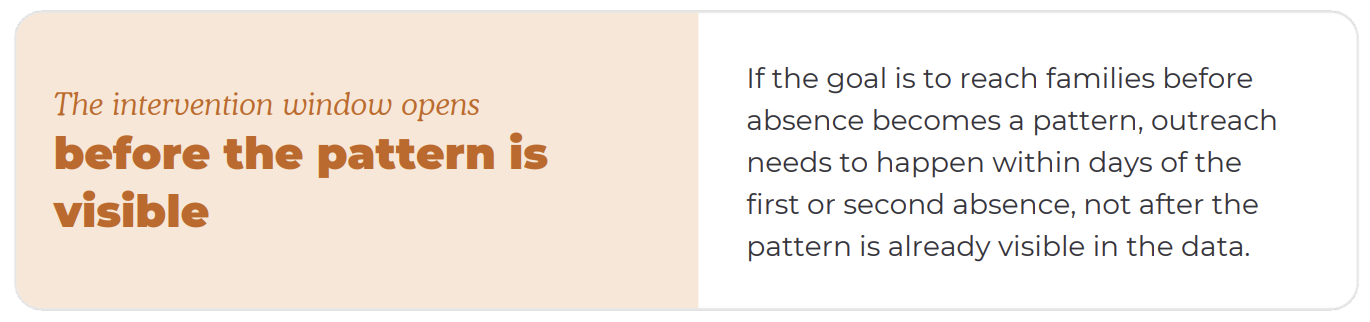
Research on attendance intervention is consistent on one point: the earlier the outreach, the better the outcome. The IES evidence clearinghouse identifies early warning systems and timely family engagement as among the most effective strategies for preventing chronic absenteeism from becoming entrenched.3 An Education Week analysis published in January 2026 found that absenteeism begins to affect academic performance in math and reading before it reaches the standard threshold for "chronic absence" of 10 percent of school days missed. The window for intervention, in other words, is earlier than the moment schools typically act.4
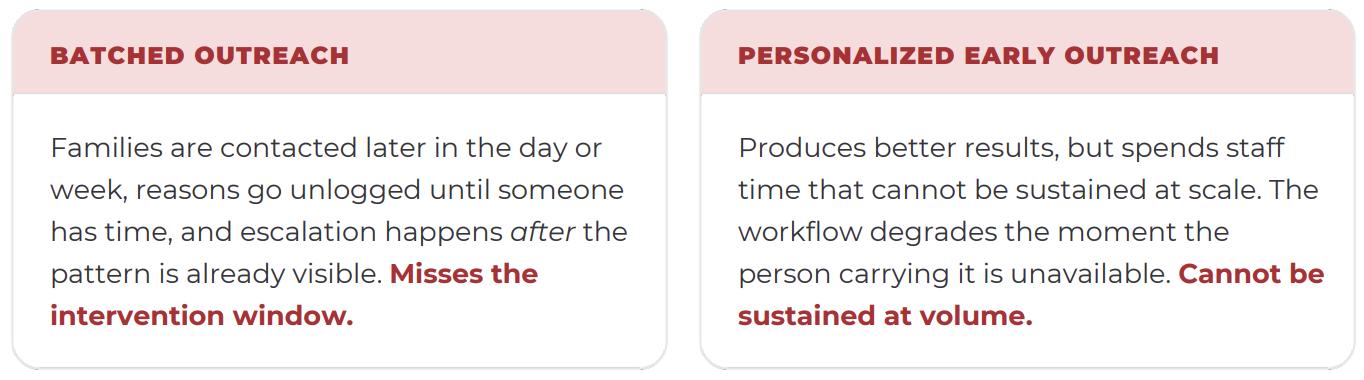
That finding has a direct operational implication. A workflow that batches calls at the endof the week, or that depends on a staff member finding time to make individual calls eachmorning, is structurally misaligned with the intervention window the research identifies.
Where the workflow breaks down
The standard attendance response at most schools involves several steps. Each is straightforward in isolation. Together, repeated for every unexcused absence, every morning, across a student body of several hundred or several thousand, they represent a significant and recurring labor cost.
In practice, that labor cost produces one of two outcomes. Both fail on the sameaxis: consistency across a full school year.
RAND’s 2024 survey found that most districts had implemented some form of attendanceintervention, but many were reporting limited success in moving their chronicabsenteeism numbers.4 The effort is there. The infrastructure to sustain it at the rightmoment, consistently, is what is missing.
What closing the gap requires
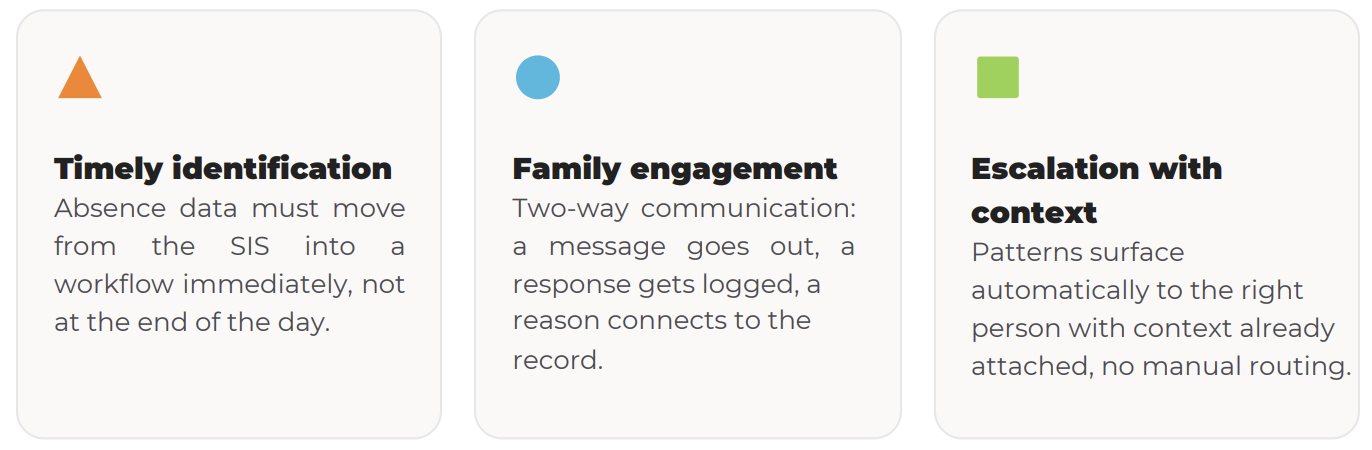
The research on what works points to three consistent elements. None is technically complex. The challenge is executing all three, reliably, for every student, without making it a manual process that degrades under normal staff constraints.5
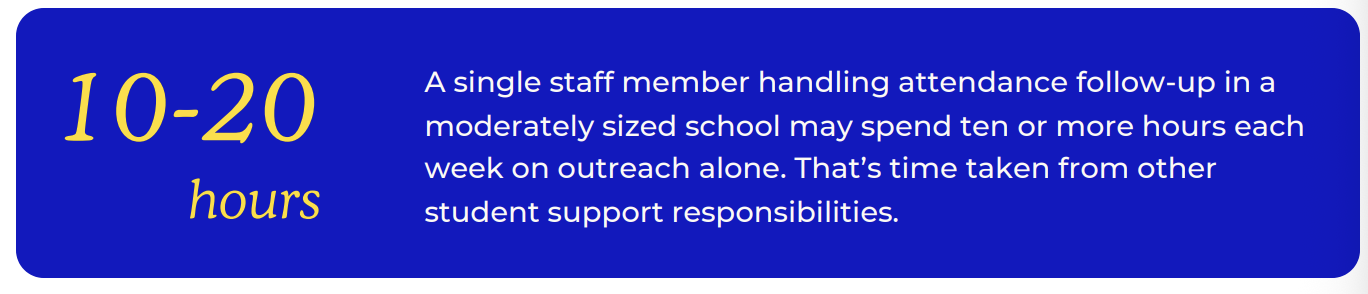
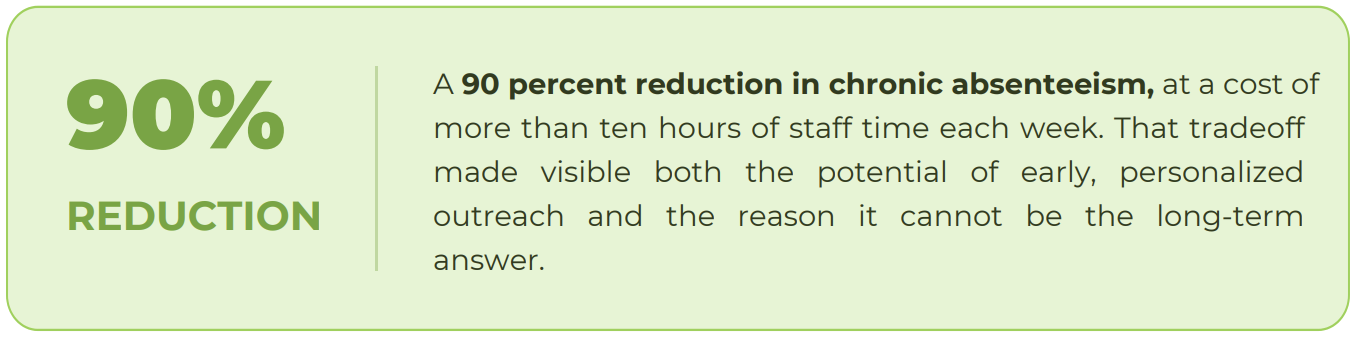
When one independent school built a highly personalized weekly attendance outreachprogram, the results were significant, as was the cost.
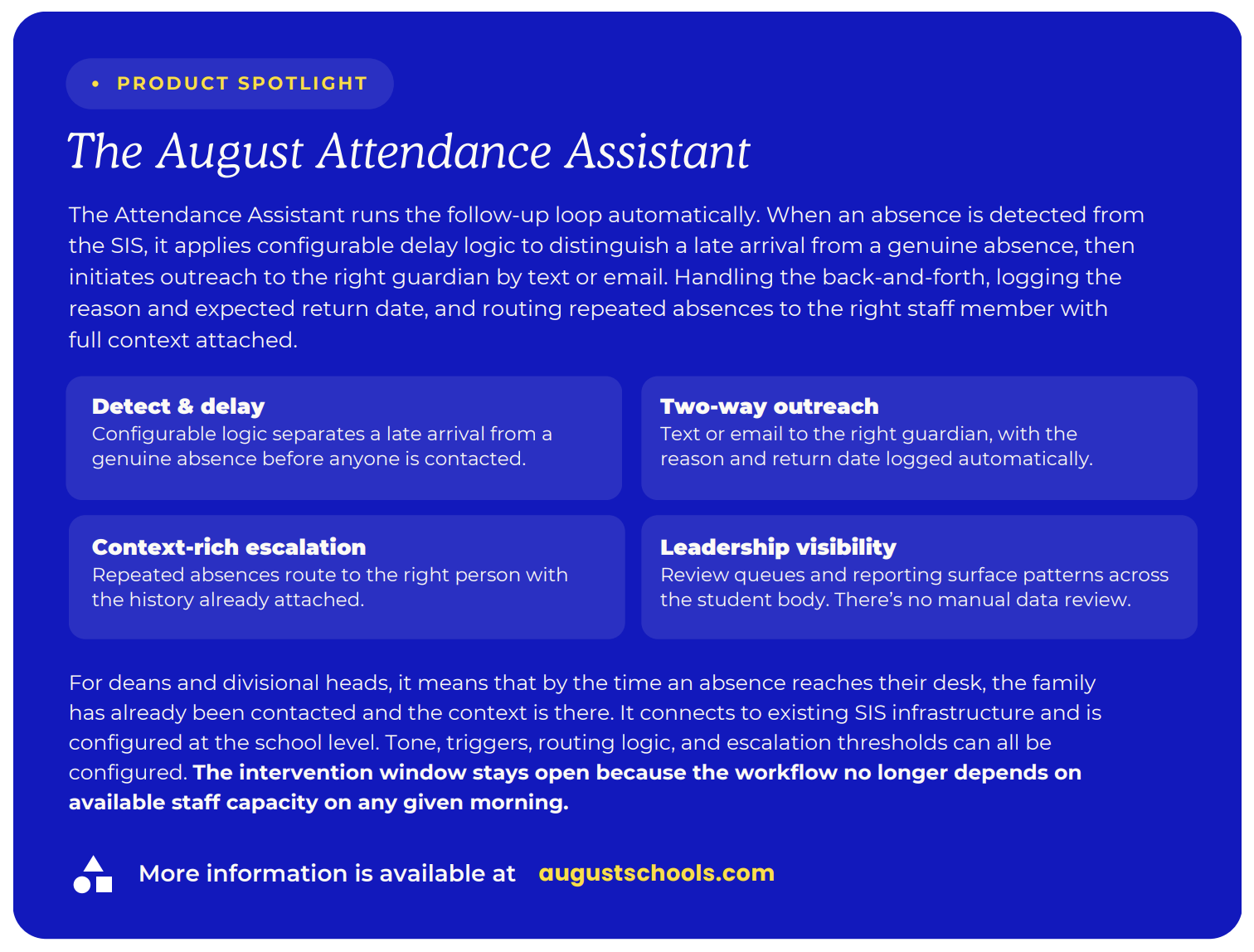
The outcome depends on the effort. What schools need is a way to sustain the outcome without sustaining the effort. That tradeoff is the real constraint. Follow-up work doesn't shrink to fit the hours a staff member has in a week, and hiring more people to do it isn't how most schools solve a problem like this. Closing the gap between detection and completed follow-up, for every student, every week, without adding headcount, is what the Attendance Assistant is built to do.